USB PD vs Quick Charge: What's the Difference?
 Telecom Digest Editorial Team · · 8 min read
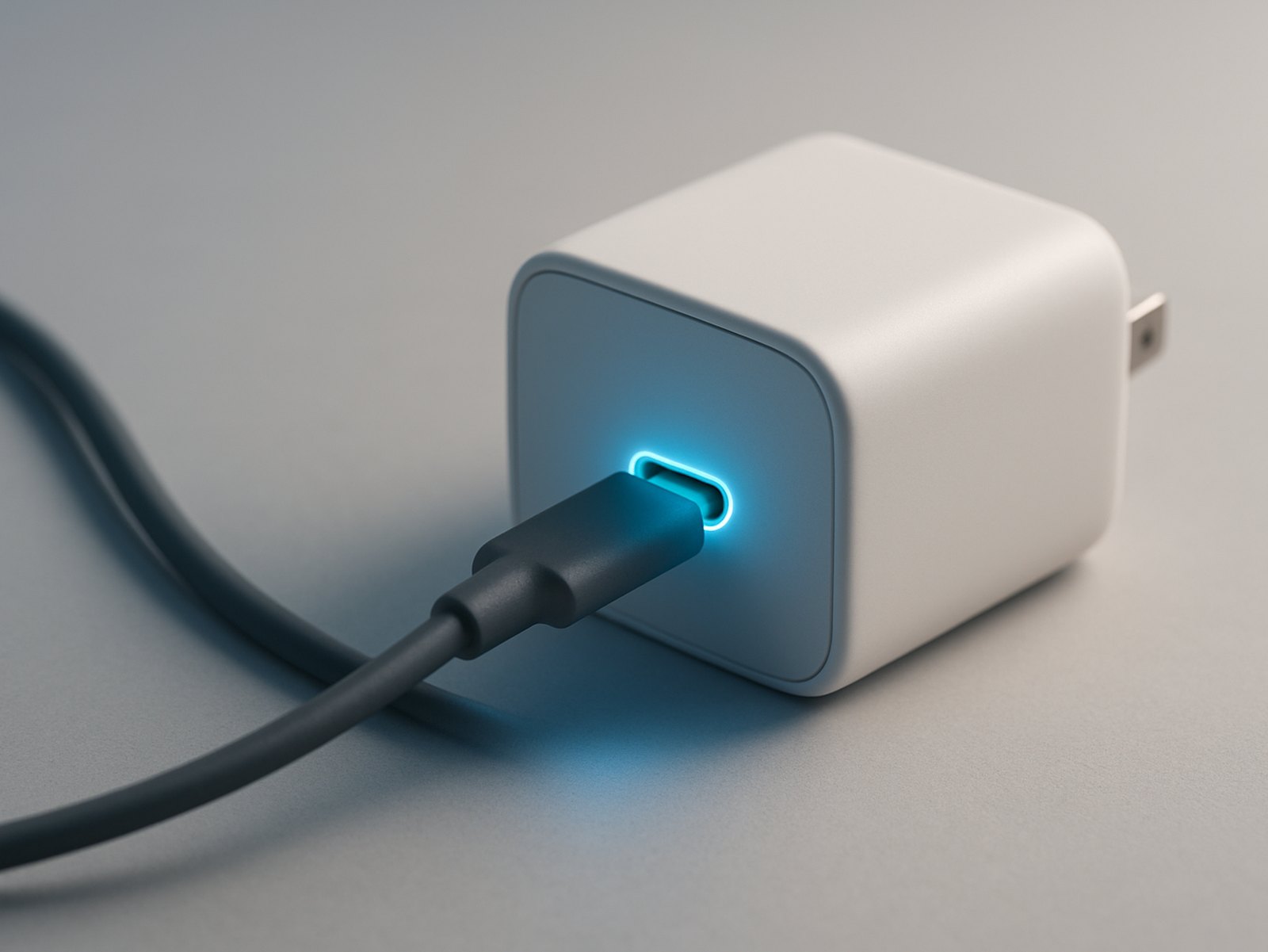
USB Power Delivery (USB PD) is the open USB-C fast-charging standard used by iPhones, most Android phones, tablets, and laptops. Qualcomm Quick Charge (QC) is Qualcomm's own standard for Snapdragon-powered Android phones. Since Quick Charge 4, QC runs on top of USB-PD and PPS rather than competing with it outright, so in practice a good PD charger with PPS covers almost everything, while a QC-only charger is a narrower, mostly legacy option.
What is USB Power Delivery (USB PD)?
USB Power Delivery is an open standard maintained by the USB Implementers Forum (USB-IF), not tied to any single chip maker. It runs over a USB-C connection and lets a charger and a device negotiate exactly how much power to send, from around 5W up to much higher ceilings depending on the PD version. Because it's an open standard, PD shows up everywhere: iPhones, iPads, most Android phones, tablets, laptops, and even monitors that charge a laptop over the same cable they use for video.
The current ceiling comes from PD 3.1, which added Extended Power Range (EPR) on top of the older Standard Power Range. Base PD tops out at 100W (20V/5A); EPR raises that to 240W (48V/5A), but only with a charger, device, and cable that all support EPR — specifically a 5A E-marked cable rated for the higher power.
What is Qualcomm Quick Charge (QC)?
Quick Charge is Qualcomm's own fast-charging standard, paired with Snapdragon chips rather than being an open spec anyone can implement. For years it was Qualcomm's answer to slow USB charging on Android phones, and it's still common on budget and mid-range Android devices with Snapdragon processors.
Quick Charge 5, announced in 2020, supports 100W-plus charging and is built on top of USB-PD and PPS rather than as a fully separate protocol — a shift that started with QC4. It's backward-compatible with QC2 and later versions, and Qualcomm's own figures claim a QC5 phone can go from empty to 50% in around five minutes under lab conditions, with roughly 70% better efficiency and about 10°C cooler operation than QC4.
USB PD vs Quick Charge: the key differences
| Spec | USB Power Delivery (PD) | Qualcomm Quick Charge (QC) |
|---|---|---|
| Standard body | Open standard, USB-IF | Proprietary, Qualcomm |
| Max power | 100W standard range; up to 240W with PD 3.1 EPR | 100W+ with QC5 |
| Works with | iPhone, iPad, most Android, tablets, laptops, monitors | Snapdragon-based Android phones |
| Voltage steps | PPS: 20mV steps; AVS (EPR only): 100mV steps | Built on PD/PPS since QC4; no separate voltage scheme |
| Typical use case | Default fast-charging standard for almost every modern device | Legacy/budget Android phones, older Snapdragon devices |
Which one does your phone actually use?
The iPhone is the clearest case: it has never supported Qualcomm Quick Charge. Every fast-charging iPhone since the iPhone 8 uses USB-PD only. Apple's own support page notes that recent models such as the iPhone 17 and 17 Pro reach about 50% charge in roughly 20 minutes with a 40W-or-higher PD adapter, and the iPhone 18 Pro and Pro Max get there in about 15 minutes. If you own an iPhone, a charger's Quick Charge support does nothing for you.
Samsung's Galaxy line needs USB-PD plus PPS, not Quick Charge, to hit its top speed. The Galaxy S25 charges at a base 25W, while the S25+ and S25 Ultra reach 45W under Samsung's "Super Fast Charging 2.0," but only with a PPS-capable PD charger and a certified 5A cable. The Galaxy S26 Ultra steps up to 60W ("Super Fast Charging 3.0"), still gated behind PD and PPS, while the base S26 stays at 25W. A Quick-Charge-only charger will not unlock any of these speeds.
Google Pixel and most current OnePlus phones follow the same pattern: they rely on PD and PPS for their fastest charging and have no dependency on Quick Charge at all.
Does Quick Charge or PD charge faster?
It's not really a straight "QC vs PD" race. Charging speed on any given phone is set by three things together: the charger's maximum wattage, the phone's own charging limit, and whether the charger supports the voltage-negotiation feature (PPS or AVS) that the phone actually needs. The badge printed on the box doesn't guarantee any of that.
A common mistake is buying a high-wattage charger that skips PPS and assuming it will charge a PPS-dependent phone at full speed. Without PPS, many PD-only chargers will still negotiate a connection, but the phone falls back to a slower, fixed-voltage PD profile instead of its fastest mode. The charger's rated wattage number alone doesn't tell you this — you have to check for PPS support specifically.
How to pick the right charger
For almost everyone, the simplest rule covers it: get a USB-C PD charger with PPS if your phone is an iPhone, a Samsung Galaxy, a Pixel, or a 2024-or-newer Android flagship. That single charger will fast-charge your phone, charge a tablet, and top up a laptop over the same port.
A Quick-Charge-only or combo PD/QC charger (often with a USB-A port) only matters if you still own an older or budget Android device that lists Quick Charge, rather than PD/PPS, as its fast-charging method. For most current phones, plugging into a QC-only charger simply means falling back to slower, basic charging rather than failing to charge at all.
Common mistakes when buying a fast charger
- Assuming a higher wattage number always means faster charging. Speed depends on the phone's own charging limit and on whether the charger supports PPS or AVS, not just on the maximum wattage printed on the box.
- Buying a Quick-Charge badge for an iPhone. The iPhone ignores Quick Charge entirely; QC support on a charger adds no benefit for it.
- Pairing a high-power charger with an unrated cable. PPS and EPR need a 5A E-marked cable — a generic USB-C cable can bottleneck even the best charger.
- Assuming a Samsung flagship will hit its top speed on any PD charger. Super Fast Charging needs PPS specifically, not just PD support in general.
Frequently asked questions
Is PPS the same as Quick Charge?
Can I use a Quick Charge charger on my iPhone?
Does a higher-wattage charger always charge faster?
Why is my phone not fast-charging with a PD charger?
What charger do I need for USB PD 3.1's 240W EPR mode?
Is Quick Charge dead?
Sources: USB Promoter Group — USB Power Delivery 3.1 Announcement, Tom's Hardware — The USB Power Delivery (PD) Specification Explained, GSMArena — Qualcomm announces Quick Charge 5, Apple Support — Fast charge your iPhone, Qualcomm — Quick Charge technology.
How we write: we compare manufacturer specifications, independent lab measurements and verified owner reports. Prices are typical US street prices as of November 2026 and change often.