How to Choose a Bluetooth Speaker: A No-Nonsense Buying Guide
 Artyom Sokolov, Audio editor · · 9 min read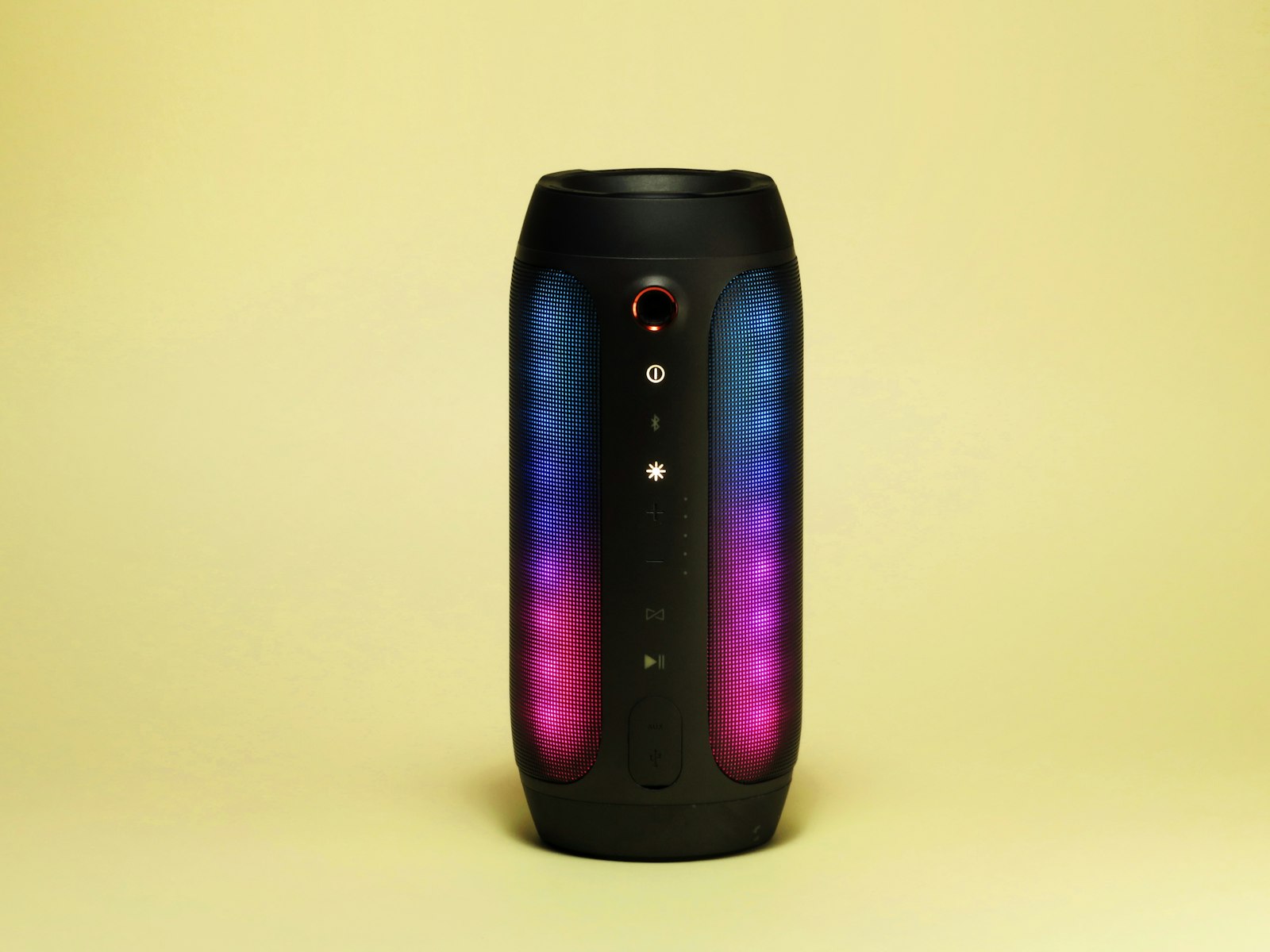
The right Bluetooth speaker depends on four things: how much you want to spend, where you'll actually use it, how long it needs to last on a charge, and whether it needs to survive rain, a pool, or a beach. Watts and brand name matter far less than most listings suggest. This guide walks through what to check before you buy, in the order it actually matters.
Most Bluetooth speaker listings lead with a wattage number and a battery-life claim, because those are easy to put in bold on a product page. Neither tells you much on its own. A speaker that's wrong for how you'll actually use it — too small for a backyard party, not water-resistant enough for the pool, or dead after an hour at the volume you actually listen at — is a bad buy no matter how many watts it claims. This guide goes through the decision in the order that actually matters: budget, battery, sound, durability, size, and connectivity, then closes with a short framework to put it all together.
How Much Should You Spend? Budget Tiers That Actually Differ
Bluetooth speakers roughly split into three price bands, and the differences between them are about more than just loudness.
- Budget (around $20–$40). Usually a single small driver, a basic plastic or silicone shell, and a companion app that's thin or nonexistent. Fine for a desk, a shower, or a backpack — don't expect room-filling sound or a rugged build.
- Mid-range (around $50–$100). This is where you start seeing a passive bass radiator, better driver materials, a real IP rating, and an app with EQ presets or a stereo-pairing feature. Most people shopping for a daily-use speaker land here.
- Premium (around $150 and up). Bigger drivers and amplifiers, tougher housings (some rated for drops, not just water), multi-driver arrays for a wider stereo image, and features like app-based multi-room audio or swappable batteries on party-style models.
The jump from budget to mid-range tends to buy you the most noticeable improvement in daily usability — better build quality, a trustworthy water rating, and app support. The jump from mid-range to premium mostly buys you more volume, a wider soundstage, and extras you may or may not use.
Battery Life: What the Spec Sheet Doesn't Tell You
Battery life, in a speaker's spec sheet, is the number of hours of playback a manufacturer measured under lab conditions — typically a fixed, moderate volume with bass boost and any lighting effects turned off. That's rarely how anyone actually listens.
In practice, running a speaker louder, with bass-boost or an EQ preset enabled, or with LED lighting active (common on party-style speakers) will pull the real runtime below the number on the box. Treat the "up to N hours" figure as a ceiling, not an expectation, and lean toward a speaker rated well above how long your typical session actually runs.
Sound Quality and Wattage: What to Listen For
A higher wattage rating does not reliably mean a louder or better-sounding speaker. Wattage is a measure of power the amplifier can push, not of perceived loudness or audio quality — driver size, enclosure design, the presence of a passive bass radiator, and how the manufacturer's DSP tunes the output all matter more. Two speakers with identical wattage ratings can sound noticeably different in bass extension, clarity at high volume, and distortion as you push the volume up.
If you can, listen before buying, or at least check independent measurements rather than the spec sheet alone. A few things worth checking instead of (or alongside) the watts number:
- Driver size and count — larger drivers and multi-driver arrays generally handle bass and volume better, independent of the wattage figure.
- Passive radiators — a passive bass radiator (a second, unpowered driver that moves with internal air pressure) extends low-end response without needing more amplifier power.
- A companion app with EQ — the ability to adjust bass, mids, and treble to taste matters more for how a speaker actually sounds to you than its on-paper spec.
Two connectivity features worth a look here too, since they affect everyday listening rather than raw sound: multipoint, which lets a speaker stay paired to two source devices at once so you can switch between, say, your phone and laptop without re-pairing each time; and stereo or multi-speaker pairing (sometimes marketed under a brand-specific name), which lets two compatible speakers from the same brand and model family link up for true stereo sound or broader coverage at a party. Multi-speaker pairing is generally brand- and model-specific, so don't assume two different manufacturers' speakers will pair with each other.
Waterproofing and Durability: Decoding the IP Rating
An IP (Ingress Protection) rating is written as "IP" followed by two digits: the first digit (0–6) rates protection against solid particles like dust, and the second (0–9K) rates protection against water. When you see "IPX" with a letter instead of the first digit, it means the dust rating wasn't tested or isn't specified — common on speakers, since water resistance is the more marketed spec.
| Rating | What it survives | Best for |
|---|---|---|
| IPX4 | Splashes and light rain from any direction, not submersion | Kitchen counters, patios, light outdoor use |
| IPX5 / IPX7 | Low-pressure water jets (IPX5) or brief full submersion in shallow water (IPX7) | Poolside use, getting caught in real rain, a drop in a puddle |
| IP67 | Dust-tight construction plus the same brief-submersion protection as IPX7 | Beach trips, sandy or dusty environments, boats |
Match the rating to where the speaker will actually live, not where you might theoretically take it once. A speaker that mostly sits on a kitchen counter doesn't need an IP67 rating; one that's going to the beach every summer does.
Size and Portability: Match the Speaker to Where You'll Use It
Size is really a proxy for a decision about where the speaker will spend most of its life.
- Get a palm-size or clip-on speaker if it's mostly going in a backpack, on a bike, or clipped to a bag — you're trading output and bass for true portability and low weight.
- Get a mid-size speaker (the most common form factor) if it's for a desk, a kitchen, or a single room — this size usually balances battery life, output, and portability best for everyday use.
- Get a larger party or tower-style speaker if it needs to fill a backyard or a room full of people — these trade portability and often price for genuinely higher maximum volume and deeper bass.
If you're torn between two sizes, think about how often you'll actually carry the speaker versus how often it'll just sit in one spot — a speaker that's inconvenient to move tends to get used less, regardless of how good it sounds.
Bluetooth Version and Connectivity: Does It Actually Matter?
Most current speakers ship with Bluetooth 5.x (5.0, 5.2, 5.3, or 5.4), which offers a meaningfully longer effective range and more stable, higher-throughput connections than the older Bluetooth 4.x generation. In day-to-day use, that mainly shows up as fewer dropouts and a more reliable connection across a room or a backyard, rather than as something you'd notice in a side-by-side audio comparison.
A few connectivity details worth checking beyond the Bluetooth version number:
- A 3.5mm aux input gives you a wired fallback for devices without Bluetooth, or for situations where you don't want to deal with pairing at all.
- A built-in microphone and speakerphone mode let you take calls or trigger your phone's voice assistant through the speaker — common on mid-range and premium models, but not guaranteed on budget ones, so check the listing if hands-free calls matter to you.
A 5-Step Framework to Pick the Right Speaker
Put it together with this order of operations rather than comparing speakers feature-by-feature from the start:
- Define your primary use case. Desk and home listening, outdoor and travel use, or parties and group listening — pick the one that describes most of your actual use, not the occasional exception.
- Set a budget tier. Decide whether you're shopping budget, mid-range, or premium before you start comparing specific models — it narrows the field fast and keeps you from overpaying for features you won't use.
- Check the IP rating against that use case. If the speaker is going anywhere near water, sand, or rain, confirm the rating matches — don't assume "water-resistant" in marketing copy means a specific, tested IP number.
- Check real battery life against your typical session length. Compare the "up to N hours" figure to how long you actually listen in one sitting, and assume real-world runtime will land somewhat below the headline number, especially at higher volume.
- Only then compare sound and wattage between your shortlisted models. Once you've narrowed to speakers that fit your budget, durability needs, and battery expectations, compare driver size, passive radiators, and (where available) independent sound measurements — not the watts number alone.
Frequently asked questions
Do more watts mean a louder or better-sounding speaker?
What IP rating do I need for pool or beach use?
Does Bluetooth 5.0 vs 5.3 actually make a difference for a speaker?
Can I pair two Bluetooth speakers together for stereo sound?
How much battery life should I actually expect in real use?
Sources: Soundcore — What to Look for When Buying Bluetooth Speakers, What Hi-Fi? — 8 things to consider before buying a Bluetooth speaker, CANYON — Bluetooth speaker buying guide: how to choose Bluetooth speakers, Bluetooth SIG — Bluetooth Technology Website (versions and range), IEC — Degrees of protection provided by enclosures (IP Code), IEC 60529.
How we write: we compare manufacturer specifications, independent lab measurements and verified owner reports. Prices are typical US street prices as of October 2026 and change often.