What Is UWB (Ultra-Wideband) and Why Doesn't Every Phone Have It?
 Telecom Digest Editorial Team · · 9 min read

UWB (ultra-wideband) is a short-range radio technology that measures distance and direction between two devices with centimeter-level accuracy, which is why it powers precise AirTag and SmartTag finding, digital car keys, and fast nearby file transfers. It is a specific chip, not a software feature, so only some phones have it.
Ultra-wideband, or UWB, is a short-range wireless radio technology that tells two devices exactly how far apart they are and roughly which direction they're in, down to a few centimeters. It is a physical radio chip built into a phone, watch, or tracker, not an app or a software update, so a device either has a UWB chip or it doesn't. You've most likely encountered it without knowing the name: it's the technology behind the arrow that points you straight to a lost AirTag, the chip that lets some cars unlock automatically as your phone approaches, and the feature that makes AirDrop or Quick Share pick the exact nearby phone you're aiming at instead of guessing from a list.
What Is UWB (Ultra-Wideband), in Plain English?
Ultra-wideband is defined by how it measures distance, not by what it's used for: it is a radio standard built specifically to answer "exactly how far, and in which direction" between two nearby devices. That single capability is reused across several unrelated-looking features, from finding a lost tracker to unlocking a car, because they all boil down to the same underlying question.
How UWB Actually Works
Most short-range wireless, including Bluetooth and Wi-Fi, estimates distance indirectly by measuring how strong a signal is, which is unreliable because walls, furniture, and even a hand around the phone change signal strength. UWB instead uses time-of-flight ranging: it sends extremely short, precisely timed radio pulses and measures how long they take to bounce between two devices. Because radio waves travel at a known, fixed speed, that timing converts directly into a distance measurement, independent of signal strength.
UWB chips operate across a wide slice of spectrum, roughly 3.1 to 10.6 GHz, using pulses that are much shorter and spread across more frequency than a typical Bluetooth or Wi-Fi signal, according to measurements compiled by Android Police and Gearbrain. That combination is what gives UWB its two headline advantages over Bluetooth, Wi-Fi, or GPS at short range: much finer distance precision, and the ability to also estimate direction (angle of arrival), not just distance.
UWB vs. Bluetooth, Wi-Fi, and GPS: What's the Difference?
Each of these radios is good at a different job. The table below compares them for the kind of short-range, "where exactly is this thing" question UWB is built to answer.
| Technology | Typical precision | Typical range | Best for |
|---|---|---|---|
| UWB | Roughly 10-30 cm, plus direction | A few meters indoors; up to around 200 m line-of-sight outdoors | Precision finding, secure keyless entry, point-and-share |
| Bluetooth (standard/LE) | Several meters, signal-strength estimate only | Up to about 10-30 m indoors | General "is it nearby" tracking, audio, low-power sensors |
| Wi-Fi | Room-level at best | Tens of meters indoors | Data throughput, general connectivity, rough indoor positioning |
| GPS | Several meters, needs open sky | Global, outdoors only | Outdoor navigation and location, not indoor or short range |
This is the core reason UWB exists alongside Bluetooth and Wi-Fi rather than replacing them: it isn't trying to move data or cover long distances, it's built specifically to answer "exactly how far, and which direction" over a short range, which none of the others do well.
What Can You Actually Do With UWB?
In practice, UWB on a phone shows up in a handful of concrete features:
- Precision Finding for trackers. Apple's Precision Finding (for AirTags and compatible items) and Samsung's equivalent for SmartTag2/SmartTag+/SmartTag3 use UWB to show live distance and an on-screen arrow pointing at the tracker, rather than just "nearby" from Bluetooth alone.
- Digital car keys. Several automakers, working through the Car Connectivity Consortium's Digital Key standard, use UWB so a car can confirm your phone is genuinely close enough (and not a relayed signal from across the street) before unlocking, which is harder to spoof than Bluetooth-only entry systems, per Gearbrain's reporting on the standard.
- Faster, more precise file sharing. Apple's AirDrop and the Android ecosystem's Quick Share/Nearby Share use UWB on supported devices to figure out which nearby phone you're physically pointing at, so you can share a photo with the right person in a crowded room instead of picking a name from a list.
- UWB smart locks and indoor wayfinding. Some newer smart locks and a handful of airport/venue wayfinding systems use UWB tags or beacons for the same centimeter-level positioning, though this is far less common in consumer products than the three uses above.
Which Phones and Devices Have UWB in 2026?
UWB is not universal, even among current flagship-tier phones. Coverage is inconsistent enough that it's worth checking your exact model rather than assuming.
| Brand | Has UWB | Does not have UWB |
|---|---|---|
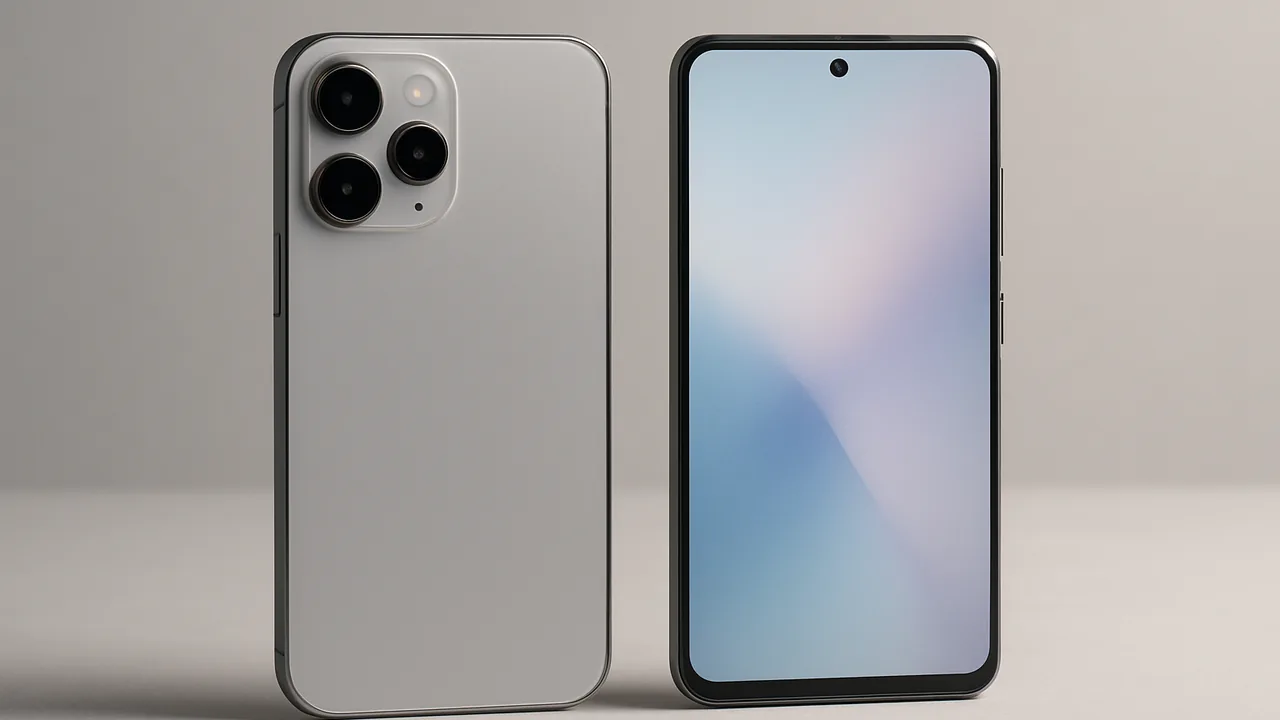
| Apple | iPhone 15 and later, including iPhone 17, iPhone 17 Pro, iPhone 17 Pro Max, and iPhone Air; Apple Watch Ultra 2 and Ultra 3; AirTag | iPhone 16e and iPhone 17e |
| Samsung | Galaxy S25+, Galaxy S25 Ultra, Galaxy S25 Edge; SmartTag2, SmartTag+, SmartTag3 | The base Galaxy S25 |
| Pixel 10 Pro, Pixel 10 Pro XL, Pixel 10 Pro Fold | The base Pixel 10 |
The pattern across all three brands is the same: UWB tends to be reserved for the higher-tier or Pro models in a lineup, while the cheapest model in that same generation (iPhone 17e, base Galaxy S25, base Pixel 10) skips it, according to Apple's own support documentation and device breakdowns from SammyGuru and Android Police.
Why Doesn't Every Phone Have UWB?
UWB chips add cost and a small amount of extra hardware complexity, which is why manufacturers tend to reserve them for pricier models rather than including them across an entire lineup, mirroring how satellite connectivity or the highest-end camera sensors get held back for flagship and Pro tiers. For most everyday phone use, like calls, browsing, or even Bluetooth-based "find my device" lookups, a phone works perfectly fine without UWB, so manufacturers can cut it from cheaper models without most buyers noticing.
Do You Actually Need UWB? A Quick Decision Guide
Whether UWB matters to you comes down to a short list of concrete habits, not a general "is it a good feature" question:
- You'll actually use it if: you own AirTags or Galaxy SmartTags and want the live distance-and-arrow finding experience, you have a car with a UWB-based digital key, or you regularly AirDrop/Quick Share files to people standing near you and want the "point at them" selection to work.
- You probably won't notice its absence if: you mainly use your phone for calls, apps, browsing, and photos, you don't own any Bluetooth trackers, and your car (if any) doesn't support a UWB digital key.
- If you're buying into a tracker-heavy or Android ecosystem: remember the Find Hub gap above; owning a UWB phone does not by itself guarantee precision finding for every tracker brand.
In short: UWB is a nice-to-have that becomes genuinely useful only if you already use the specific accessories (trackers, a compatible car, or frequent close-range file sharing) that rely on it. It isn't a feature that changes day-to-day phone use on its own.
Frequently asked questions
Does UWB drain my phone's battery?
Is UWB the same thing as GPS?
Can UWB be used to track me without my permission?
Do I need line of sight for UWB to work?
Do I need a UWB-enabled phone to use AirTags or SmartTags at all?
Will Wi-Fi or Bluetooth eventually replace UWB?
Sources: Apple Support — Learn about Ultra Wideband availability, Android Police — Ultra-wideband (UWB): What is it and how it works, Gearbrain — What is ultra-wideband? New wireless smartphone technology explained, 9to5Google — Android Find Hub trackers continue to ignore UWB, Android Police — Google Pixel 10 series UWB features and uses.
How we write: we compare manufacturer specifications, independent lab measurements and verified owner reports. Prices are typical US street prices as of October 2026 and change often.